Advantages of Green & Sustainable Modular Buildings

Deep Dive Into Sustainable Modular Buildings

Featured Green Case Study

Project Spotlight

Sustainable Modular Building FAQs

Sustainable modular construction directly supports ESG goals by lowering a project's carbon footprint, using materials more efficiently, and promoting better inventory control. The ability to reuse or relocate modular units also aligns with sustainability targets for minimizing long-term waste.

Yes, sustainable modular buildings can be equipped with all of the same renewable energy systems as traditional buildings including solar panels, green roofs, and high-efficiency HVAC systems.

Permanent modular buildings are built to last for decades, adhering to the same building codes as site-built structures. Their durability and long lifespan mean fewer resources are consumed for replacement projects.

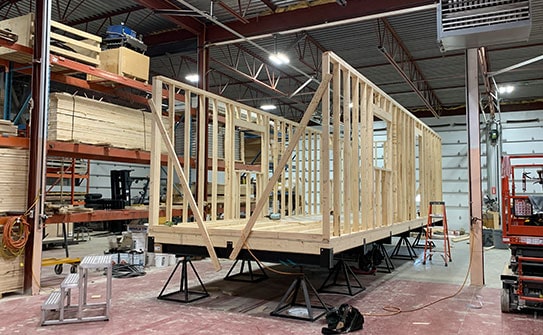
Modular buildings are often more energy-efficient than traditional buildings. As modules are constructed indoors, quality control is rigorous. The seams, insulation, and air barriers are able to be more precise, which results in tighter construction. This superior thermal envelope minimizes air leaks, significantly reducing heating and cooling costs over the life of the building.

"Going green" modular building solutions help meet Net-Zero Energy (NZE) goals primarily by achieving a superior, airtight building envelope. Because construction happens in a climate-controlled factory, components are built with greater precision and better alignment than on a traditional site. 

This precision minimizes gaps and thermal bridging which drastically reduces heating and cooling energy loss. By minimizing the building's overall energy demand, modular construction makes it easier and more cost-effective to offset remaining consumption with on-site renewables like solar power.

back to top